How Pencil chose its first program before its raise
Sleuth provides a confidence score for every value, so you know which to trust and which to review. Pencil Biosciences, a seed-stage gene-editing company, could potentially aim its platform at many diseases. With a raise coming up, it needed to select one lead program it could defend to investors.

Download the full case study
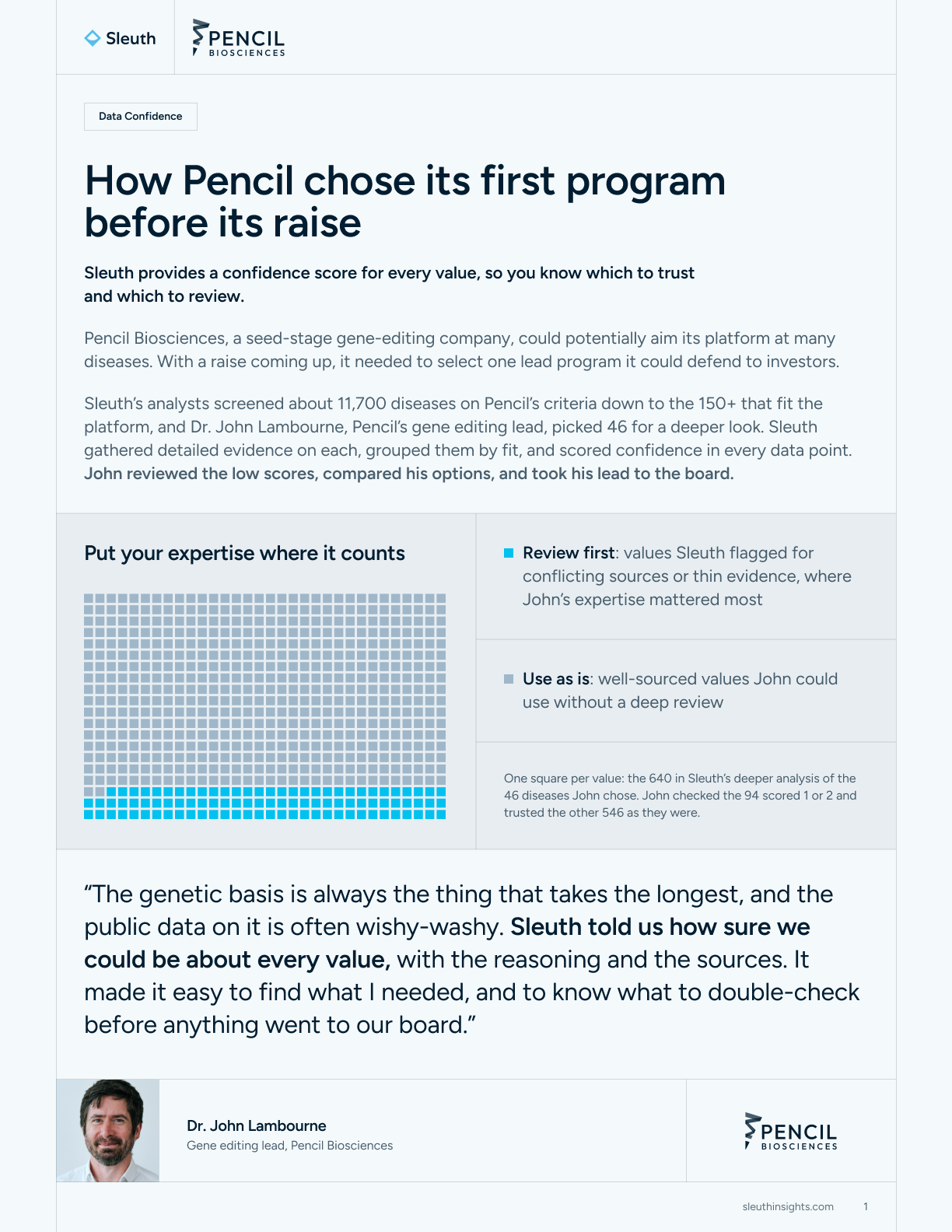
Sleuth’s analysts screened about 11,700 diseases on Pencil’s criteria down to the 150+ that fit the platform, and Dr. John Lambourne, Pencil’s gene editing lead, picked 46 for a deeper look. Sleuth gathered detailed evidence on each, grouped them by fit, and scored confidence in every data point. John reviewed the low scores and compared his options before the lead went to Pencil’s board.
Put your expertise where it counts

John used confidence scores to trust the data and narrow the shortlist
Narrowing 150 diseases to a few dozen only works if you trust the numbers your cuts are based on. Sleuth’s analysts built Pencil’s shortlist on Pencil’s criteria, with a confidence score on every estimate of a disease’s patient population. John trusted the well-supported ones, weighed the precision of the estimates on the rest, and used his expertise to pick 46 for deeper analysis.
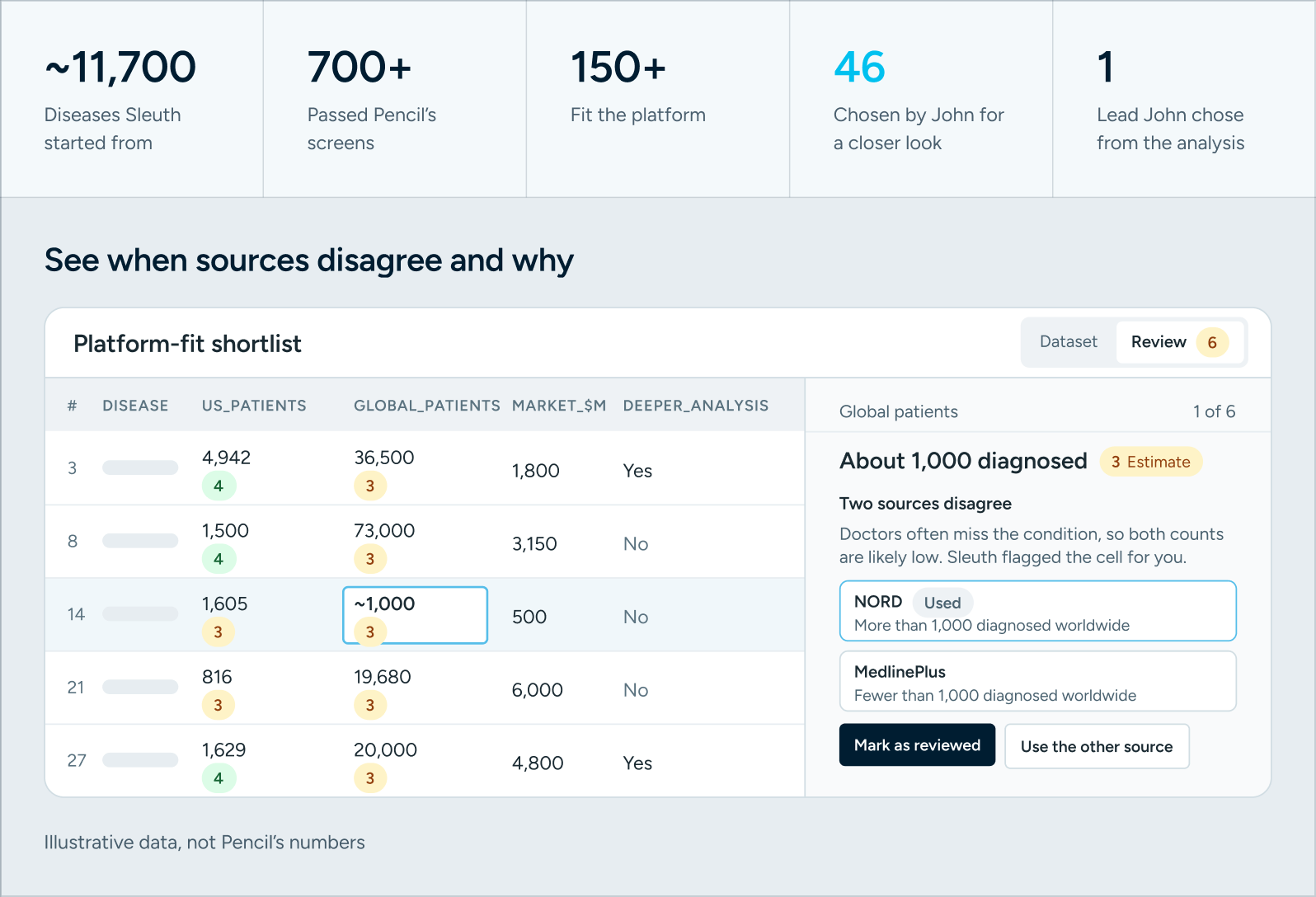
Sleuth’s analysts went deeper on John’s shortlist
For each of the 46 diseases on the shortlist, Sleuth’s analysts added 14 measures in four areas, scored every value, and grouped the diseases by fit, so John could compare them side by side and choose his lead.
Pencil’s lead went to its board on data John trusted
A diligent board will ask why one disease was selected over the others. John chose Pencil’s lead from Sleuth’s deep analysis of his shortlist. Every value behind the recommendation had a score, and he had reviewed the ones that needed it. Three days later, Sleuth’s analysts had a full landscape on the lead: competitors, deals, financings, unmet need, and the market.
