
Download the Report
ASCO 2026’s abstracts show where oncology research energy is concentrating
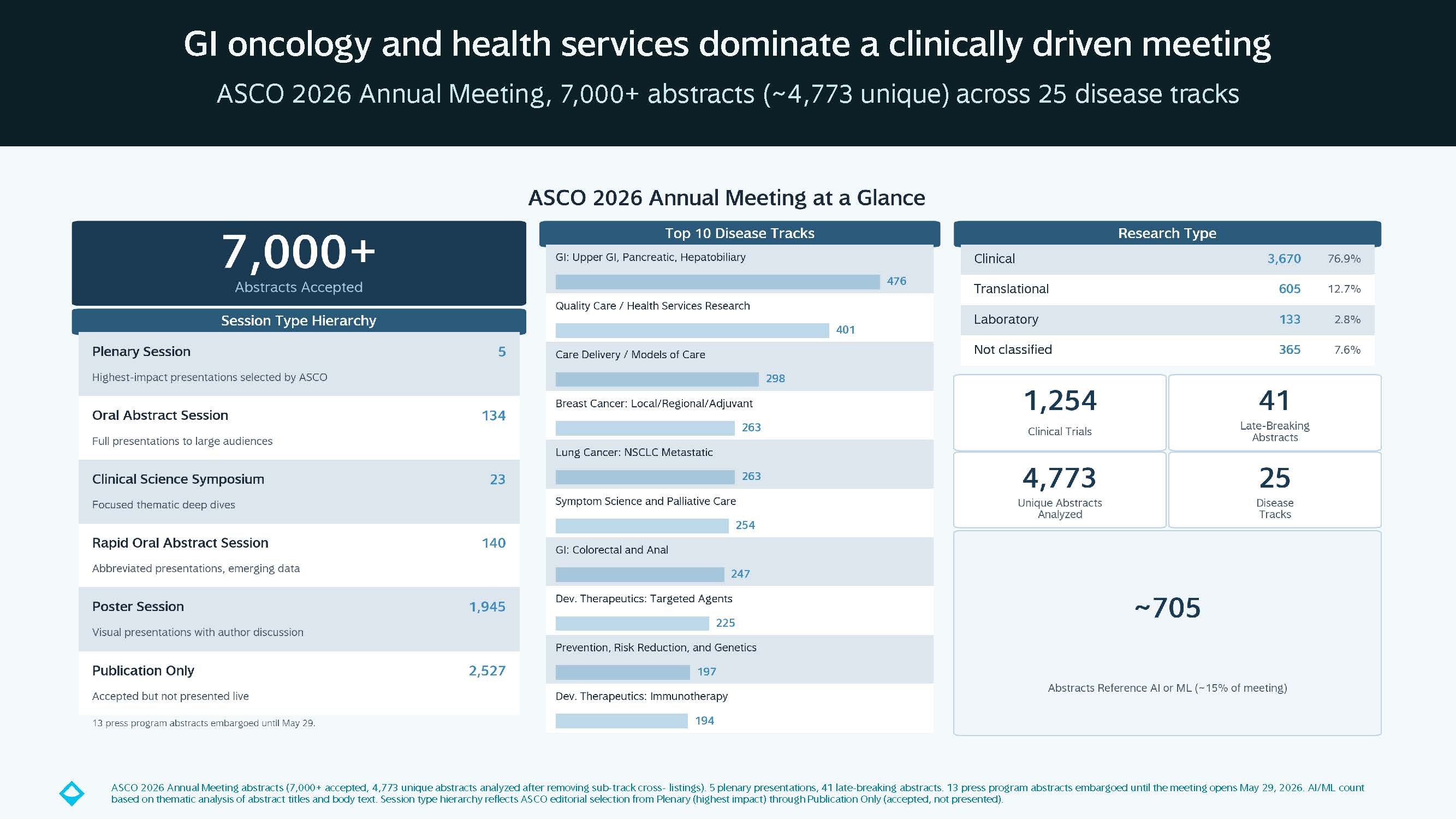
Oncology research at ASCO 2026 is shifting toward antibody-drug conjugates (ADCs) beyond their first targets, bispecifics in solid tumors, RAS inhibition and treatment de-escalation. Sleuth analyzed 4,773 unique abstracts from the more than 7,000 accepted, across 25 disease tracks, ahead of the May 2026 meeting. The plenaries dominate the conversation, but a corpus this large shows where collective research effort is going, not just the trials everyone already knows.
ADCs and bispecifics are both moving beyond their first wins
ADCs are migrating from salvage therapy toward front-line treatment across 280 abstracts. HER2-directed ADCs still lead with 117, including 28 in first line, and Nectin-4 shows the sharpest shift, with 18 first-line abstracts against five in relapsed or refractory disease. Beyond the established targets, 86 abstracts target emerging antigens such as Claudin, B7-H4 and tissue factor. Bispecifics are crossing from blood cancers into solid tumors: 128 of 181 bispecific abstracts are in solid-tumor indications. CD3 T-cell engagers remain the largest class with 79 abstracts, split nearly evenly between blood cancers (41) and solid tumors (38), and PD-1 x VEGF bispecifics account for another 38, all in solid tumors.
In both classes, the next competition is over which constructs can move earlier in treatment and into tumors the first generation could not reach.
RAS is druggable, and the plenary proved it
Sleuth counted 84 KRAS agents in clinical development across six mechanism classes, well beyond covalent G12C inhibitors (27 agents, 6 approved): G12D-selective inhibitors (18), pan-RAS and pan-KRAS agents (17), other approaches (15), degraders (4) and multi-selective RAS(ON) inhibitors (3). At the ASCO plenary, Revolution Medicines’ daraxonrasib nearly doubled median overall survival in previously treated metastatic pancreatic cancer in the Phase 3 RASolute 302 trial, 13.2 months against 6.7 months with chemotherapy (hazard ratio 0.40).
A survival benefit in one of the hardest tumors to treat moves RAS from a validation question to a competition over mechanism, line of therapy and combinations.
Several themes are shifting from signal to clinical practice
GLP-1 and obesity research generated 91 abstracts, 57 of them observational. In Sleuth’s 56-study evidence landscape, colorectal cancer shows the strongest protective signal, breast cancer evidence is mixed and thyroid cancer carries a cautionary signal, and only one registered randomized cancer treatment trial exists worldwide. Liquid biopsy has moved from a technology story to a clinical-utility story, with 330 abstracts across six use cases from MRD monitoring to early detection. De-escalation is one of the largest themes at the meeting, with 632 abstracts anchored by chemotherapy-omission trials such as OPTIMA, and cell therapy is expanding beyond CAR-T into TIL, TCR-T and CAR-NK across 187 abstracts and 122 tracked programs.
The GLP-1 signal is real but early, while liquid biopsy and de-escalation are already changing how trials are designed. The full analysis also covers survivorship and toxicity (543 abstracts), 28 blood-based multi-cancer early detection tests, IO pricing and the pembrolizumab biosimilar cliff, and catalysts through 2028.
Abstract counts are from the ASCO 2026 accepted-abstract corpus, and pipeline counts are from Sleuth’s landscape data, as of May 2026. RASolute 302 results are as presented at the ASCO 2026 plenary.
Frequently asked questions about ASCO 2026
How many abstracts were accepted to ASCO 2026?
More than 7,000 abstracts were accepted to the ASCO 2026 Annual Meeting. Sleuth analyzed 4,773 unique abstracts across 25 disease tracks.
What were the biggest themes at ASCO 2026?
ADCs moving toward front-line treatment (280 abstracts), bispecifics in solid tumors (128 of 181 bispecific abstracts), KRAS and RAS inhibition (84 clinical agents), liquid biopsy (330 abstracts), de-escalation (632 abstracts) and survivorship and toxicity (543 abstracts).
What did daraxonrasib show at ASCO 2026?
In the Phase 3 RASolute 302 trial in previously treated metastatic pancreatic cancer, daraxonrasib reached a median overall survival of 13.2 months against 6.7 months with chemotherapy, a hazard ratio of 0.40.
Do GLP-1 drugs reduce cancer risk?
The evidence is mixed and mostly observational. ASCO 2026 included 91 GLP-1 and obesity-related cancer abstracts, 57 of them observational. In Sleuth’s 56-study evidence landscape, colorectal cancer shows the strongest protective signal, breast cancer evidence is mixed and thyroid cancer carries a cautionary signal, and only one randomized cancer treatment trial is registered.