Molecular Glue Dealmaking Has Bifurcated: $40B in Biobucks, $60M Median Upfront
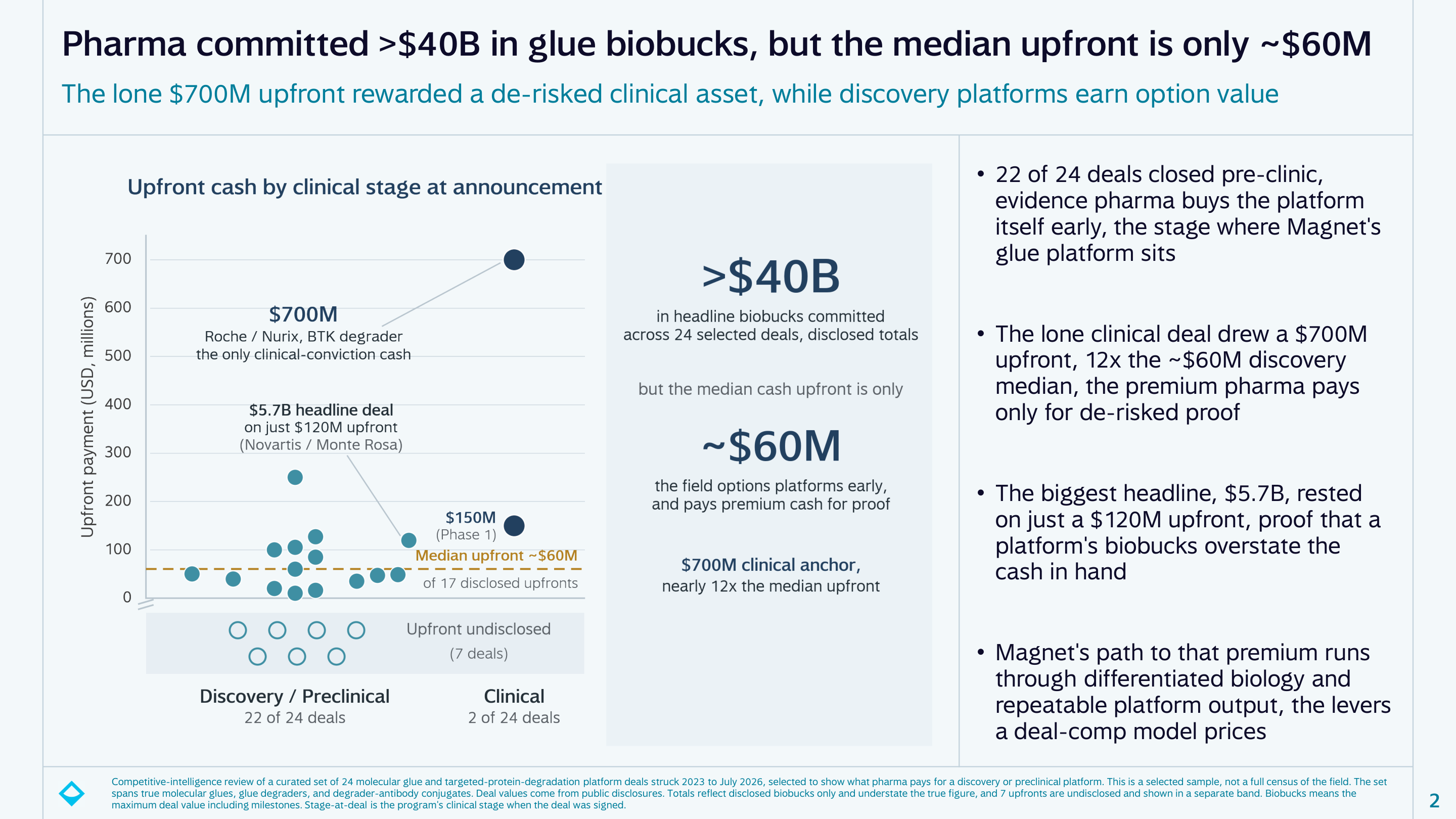
24 molecular glue and targeted protein degradation deals mapped since 2023. Over $40B in headline biobucks, but the median upfront is only ~$60M. Cash conviction is reserved for clinically proven assets. The uncrowded frontier sits beyond E3 ligases, where only 2 of 24 deals have reached.

Download the Report
Note: This analysis was prepared by Sleuth as an independent external read. Kenai Therapeutics is not a Sleuth client, and nothing here is based on proprietary or internal company information. This is an abridged example of a Sleuth analysis for biotech CEOs.
Molecular glue dealmaking has surged past $40B in headline biobucks since 2023, but the economics underneath are more nuanced than the press releases suggest. If you're a CEO positioning a glue platform for partnering, the first thing a pharma BD team will do is benchmark your deal against every comp in the class.
This read maps 24 platform deals and shows where the leverage is for an early biotech. The median upfront is only ~$60M; most deals are option-heavy discovery agreements. The sole exception is Roche's $700M upfront for a clinically de-risked BTK degrader. So the question for a preclinical platform CEO is how to pull your asset toward the clinical-conviction premium, not just the option-value floor.
The mechanism split matters just as much. Cereblon-based degraders account for 10 of 24 deals. Novel E3 ligases make up another 8. Only 2 of 24 reach beyond E3 ligases entirely. A CEO sitting in that uncrowded frontier has a differentiation story unavailable to most of the field, but only if they can show a BD evaluator exactly where they sit relative to every deal that's been struck in the space.